
Crystal Hall
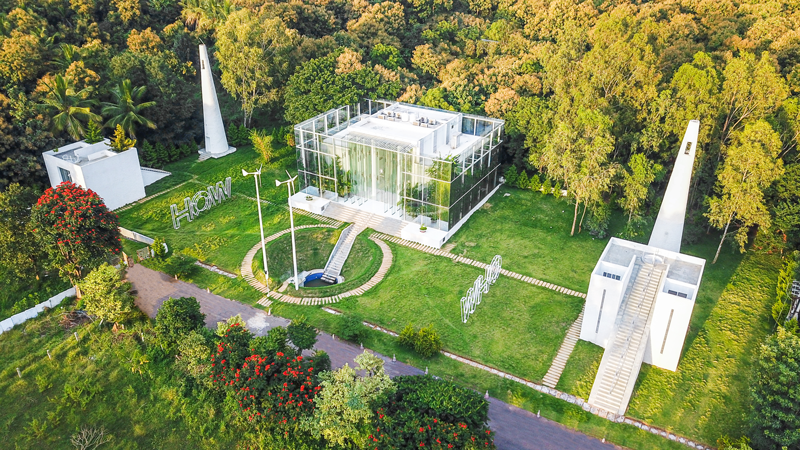
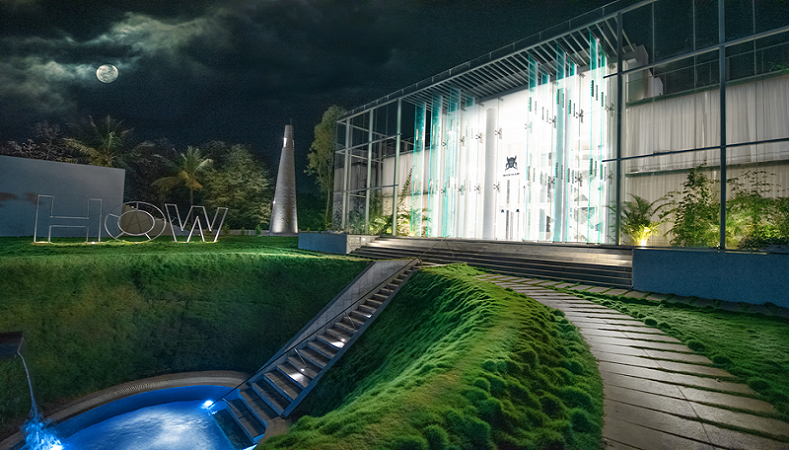
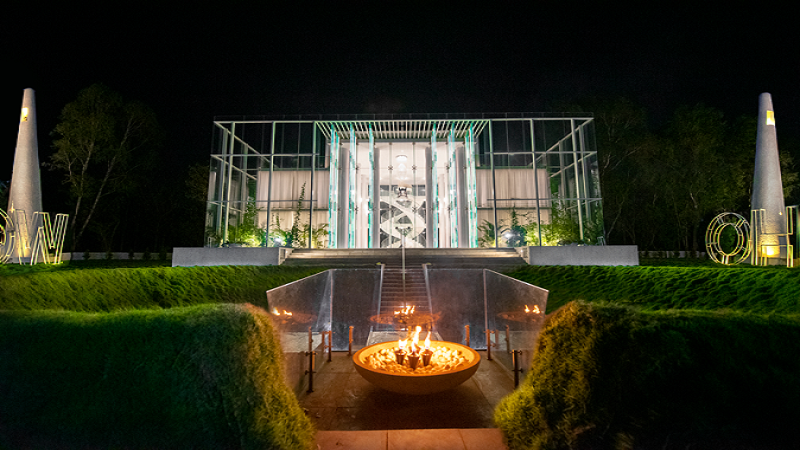
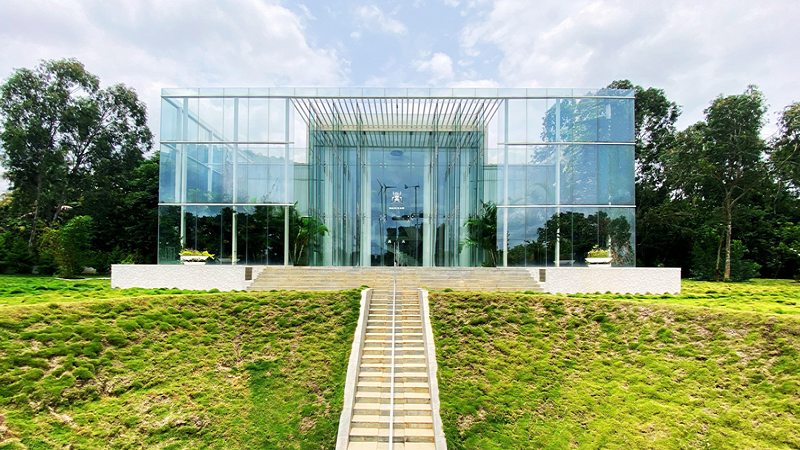
The first concern that arises about a glass building in the tropics is heat. Concerns about sustainability, global warming, and carbon footprints are authentic. And how about a glass residence without windows and air-conditioning, and yet sustainable? Seems implausible? Crystal Hall, a 30-foot-tall two-story home, is exactly that. In the 7 to 10 feet gap between two levels of high-performance glass, a thickset of tropical rainforest trees are encased in a sheer glass layer.
“The presence of the twin glass walls, along with the thick rainforest vegetation sandwiched within, cuts the heat ingress. The first glass layer reflects 35% of incident heat, followed by the open-to-sky rainforest radiating the remaining heat upwards. The final glass layer further reduces heat transmission by 35% – so that over 66.2% of the exterior heat is deflected from the interiors. The thick greens provide privacy to the interiors”, explains the Architect, Thomas Abraham. “The double glazing along with the thick greens, while keeping out the heat and enabling the ambient temperature to fall by a few notches, also insulates against external noise while ensuring copious natural light seeps into the interiors.”
It is natural to infer that the residence is air-conditioned given the absence of any windows in the structure. However, Thomas points out that there is no air conditioning in the building. Insulation is provided by the trees and high-performance glass walls. Exhausts in the ceiling pull heated air out of the room, allowing for natural ventilation. Thomas smiles as he points out at the strategically positioned vents to cool the room down.
While the building was primarily designed as a residential unit, it is also designed to showcase and invite intelligentsia and academia to discuss art, architecture, and philosophy, as requested by the client. The Crystal Hall is designed to be a seminar space for groups of up to 50 people, a place for conversations for things that matter-perfect for art evenings, library readings, and fashion shows and film shooting.
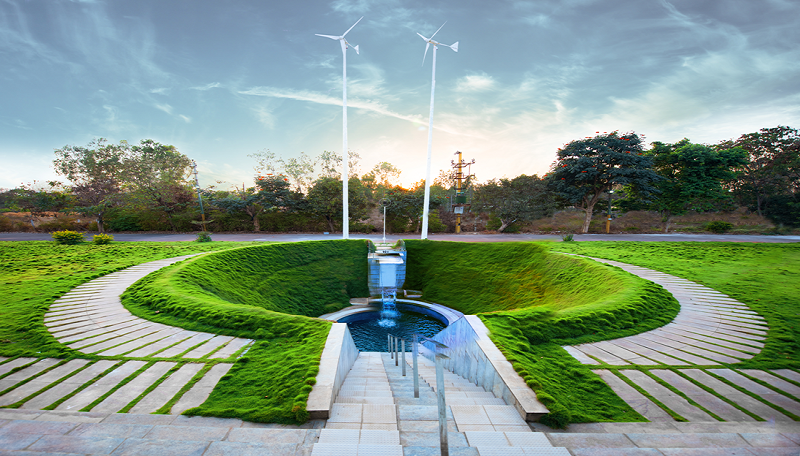
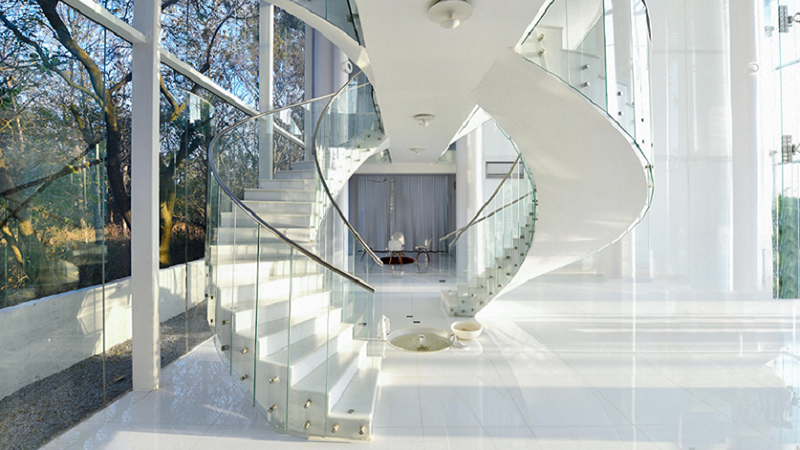
Though Crystal Hall embraces the concerns, materials and technology of our times, it draws inspiration from classical and vernacular architecture – whether it be design principles like symmetry and the golden ratio, or design elements like towers, colonnades, grand staircases and steeples. For that matter, it even incorporates the five 'natural' elements – Earth (Prithvi), Water (Jala), Fire (Tejas), Wind (Vayu) and Space (Akasha) into its design ethos.
Finally, this is a building of, for and by nature. Sleeping in the bedroom feels like lounging in the woods, protected from the elements but in harmony with the universe.
In less than two years after its completion, The Crystal Hall which is renowned for its sustainable and socially responsible architectural practices has won more than 15 international awards